
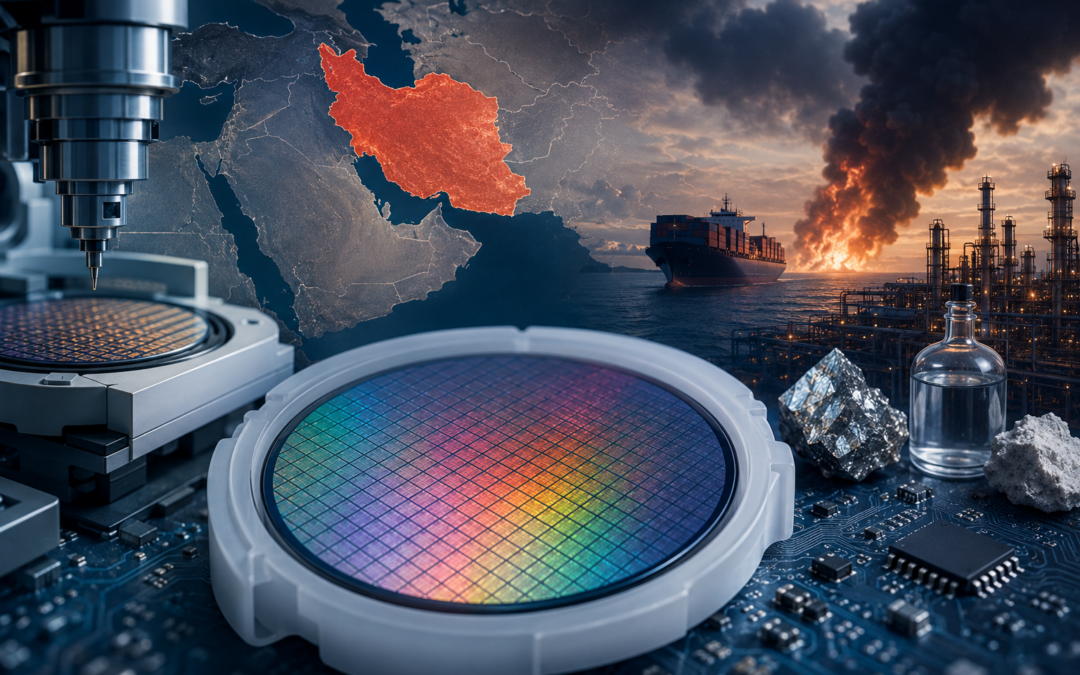
The global semiconductor industry depends on a highly interconnected supply chain that stretches across continents. While silicon itself is one of the most abundant elements on Earth, the production of semiconductor-grade silicon wafers requires a steady supply of raw materials, specialty gases, chemicals, energy, and transportation infrastructure. As geopolitical tensions involving Iran continue to create uncertainty in the Middle East, semiconductor manufacturers and equipment suppliers are paying close attention to potential disruptions that could impact the industry’s ability to meet growing demand. For companies such as Wafer Process Systems, which support semiconductor manufacturers with advanced wet processing equipment, understanding these risks is essential.
The Global Semiconductor Supply Chain Relies on Stability
Silicon wafer manufacturing requires far more than just raw silicon. Semiconductor fabrication facilities depend on an international network of suppliers that provide gases, chemicals, specialty materials, and precision equipment. Any disruption within this network can create delays, increase costs, and affect production schedules worldwide.
Helium Supply Risks and Their Impact on Semiconductor Manufacturing
One of the most significant concerns related to conflict in the Middle East is the potential disruption of helium supplies. Helium plays a critical role in semiconductor manufacturing, where it is used for cooling processes, lithography systems, leak detection, and wafer production. Qatar produces a substantial portion of the world’s helium supply, and much of it moves through shipping routes connected to the Strait of Hormuz.
Why Helium Is Essential for Advanced Wafer Processing
Helium’s unique properties make it difficult to replace in many semiconductor applications. Any interruption in supply can lead to higher costs and potential delays for manufacturers producing advanced chips used in artificial intelligence systems, consumer electronics, automotive technologies, and industrial equipment.
Raw Material and Chemical Supply Concerns
The conflict can also affect the availability of other materials used in semiconductor production. Bromine, aluminum, sulfur-derived chemicals, and specialized solvents are important inputs throughout the wafer manufacturing process. The Middle East contributes significantly to the global supply of several of these materials.
Disruptions caused by military activity, sanctions, transportation delays, or infrastructure damage can create bottlenecks that increase manufacturing costs and slow production schedules. Semiconductor manufacturers often maintain inventories of critical materials, but prolonged disruptions can still have a noticeable impact on production capacity.
Rising Energy Costs Can Increase Manufacturing Expenses
Semiconductor fabrication facilities consume enormous amounts of electricity and require highly stable operating environments. Historically, geopolitical tensions in the Middle East have contributed to increased oil and natural gas prices, which can affect energy costs worldwide.
Higher energy expenses can increase the cost of producing silicon wafers and finished semiconductor devices. These increased costs often move through the supply chain, ultimately affecting the price of electronic products ranging from smartphones and computers to data center infrastructure and AI hardware.
Shipping and Logistics Challenges
The Strait of Hormuz remains one of the most important shipping corridors in the world. If maritime traffic becomes restricted or delayed, transportation costs can rise significantly. Even temporary interruptions may force semiconductor manufacturers to seek alternative suppliers or transportation routes, often at a premium cost.
For companies operating in the semiconductor sector, supply chain visibility and strategic planning become increasingly important during periods of geopolitical uncertainty.
Preparing for a More Resilient Semiconductor Future
The effects of the Iran conflict extend beyond immediate material shortages. Long-term uncertainty encourages semiconductor manufacturers to diversify supply chains, increase inventory reserves, and invest in regional sourcing strategies. As demand for artificial intelligence, electric vehicles, and advanced computing continues to grow, resilience will become a key competitive advantage.
At Wafer Process Systems, we understand that successful semiconductor manufacturing depends on reliability, precision, and operational stability. While geopolitical events are beyond the control of manufacturers, investing in efficient wet processing equipment and robust production strategies can help fabs maintain productivity during periods of global uncertainty. As the semiconductor industry continues to evolve, supply chain resilience will remain just as important as technological innovation.