
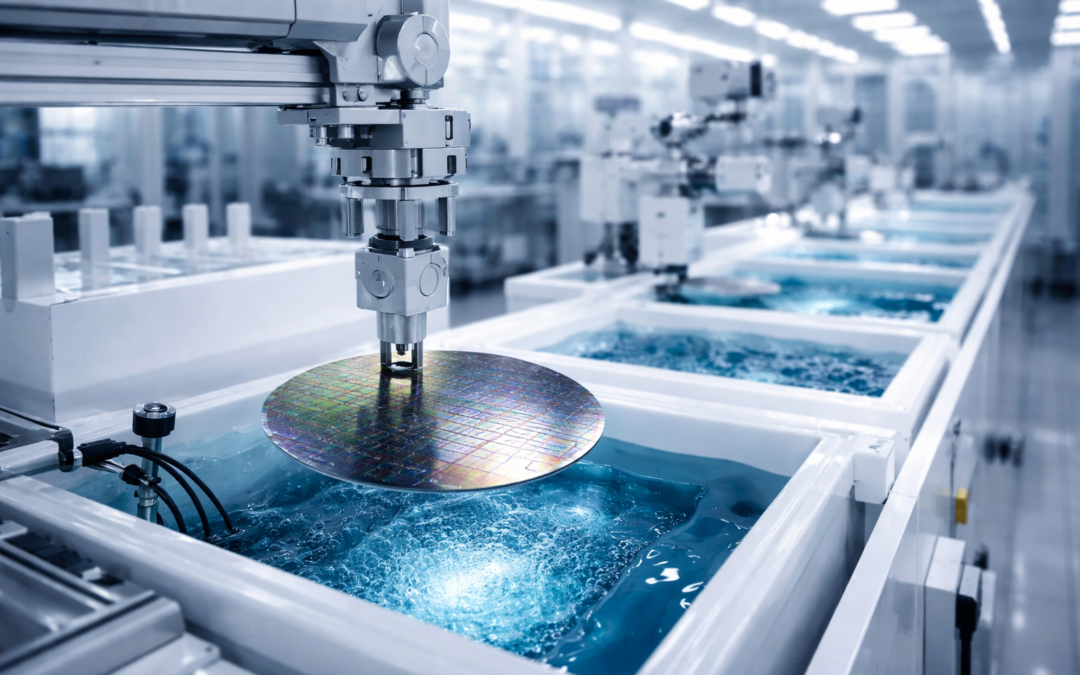
As artificial intelligence, electric vehicles, and high-performance computing continue to reshape global industries, the semiconductor sector is under unprecedented pressure to deliver faster, smaller, and more reliable chips. Behind the scenes, one of the most critical—and often overlooked—contributors to this innovation is advanced wet processing technology.
Wet processing plays a foundational role in semiconductor fabrication, enabling the cleaning, etching, and preparation of wafers at multiple stages of production. These processes rely on precisely controlled chemical interactions to remove contaminants, shape microscopic structures, and prepare surfaces for subsequent layering. Without highly controlled wet processing, modern chip manufacturing simply would not be possible.
Today’s leading-edge chips, especially those designed for AI and machine learning applications, require incredibly tight tolerances and near-zero defect rates. As device geometries shrink and architectures become more complex, traditional processing methods are no longer sufficient. Semiconductor manufacturers are increasingly turning to custom-engineered wet bench systems that provide enhanced precision, repeatability, and contamination control.
Modern wet process systems are evolving rapidly to meet these demands. Automation and robotics are now integrated into many platforms, reducing human handling and improving consistency across wafers. This level of control is essential, as even microscopic contamination can significantly impact chip performance and yield.
Efficiency is another major focus in today’s fabrication environments. With fabs investing billions into production facilities, maximizing throughput is critical. Advanced wet processing solutions are designed to optimize wafer-per-hour output while maintaining strict quality standards. Data-driven process control and intelligent system design can improve throughput by 10–20%, directly impacting profitability and delivery timelines.
Sustainability is also becoming a key driver in semiconductor manufacturing. As global regulations tighten and environmental concerns grow, manufacturers are seeking ways to reduce chemical usage and waste. Next-generation wet process equipment incorporates chemical recycling systems, improved filtration, and closed-loop controls to minimize environmental impact while maintaining performance.
For companies like Wafer Process Systems, this evolving landscape presents an opportunity to deliver highly customized solutions tailored to the specific needs of each fabrication facility. From semiconductor and MEMS production to solar and photonics applications, custom wet benches and chemical systems provide the flexibility required to adapt to new materials, processes, and production scales.
Looking ahead, the demand for advanced semiconductors will only continue to grow, driven by AI, 5G, and next-generation computing technologies. As the industry pushes the boundaries of what is possible, the importance of precision-engineered wet processing solutions will only increase.
In a world where every nanometer matters, the right wet process technology is not just a supporting tool—it is a competitive advantage.